


Yo, folks! As a supplier of Electric Steel Bar Shear Lines, I often get asked about anti - jamming measures in the electrical system of these machines. So, I thought I'd write this blog to shed some light on the topic.
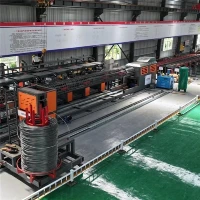
First off, let's understand what an Electric Steel Bar Shear Line is. It's a crucial piece of equipment in the metalworking industry. These lines are used to cut steel bars into specific lengths with high precision. They're super important for construction projects, manufacturing plants, and all sorts of places where steel bars are needed. If you want to know more about it, check out this Electric Steel Bar Shear Line.
Now, the electrical system in an Electric Steel Bar Shear Line is the heart of the machine. It controls everything from the movement of the cutting blades to the feeding mechanism of the steel bars. And just like any electrical system, it's prone to interference and jamming.
There are several sources of interference that can affect the electrical system. One common source is electromagnetic interference (EMI). This can come from other electrical equipment in the vicinity, such as large motors, generators, or even high - voltage power lines. EMI can disrupt the signals in the electrical system of the shear line, causing malfunctions or inaccurate cutting.
Another source of interference is radio - frequency interference (RFI). This can be caused by wireless devices like cell phones, Wi - Fi routers, or even radio transmitters. RFI can also mess up the electrical signals in the shear line, leading to problems with its operation.
So, what are the anti - jamming measures we use in our Electric Steel Bar Shear Lines?
Shielding
One of the most basic anti - jamming measures is shielding. We use shielded cables in the electrical system of our shear lines. These cables have a layer of conductive material around the inner wires, which helps to block out external electromagnetic and radio - frequency signals. By using shielded cables, we can reduce the impact of EMI and RFI on the electrical signals in the machine.
For example, if there's a large motor running nearby that's generating a lot of electromagnetic noise, the shielded cables in our shear line will prevent that noise from interfering with the signals that control the cutting blades. This ensures that the shear line operates smoothly and accurately.
Filtering
We also use filters in the electrical system. Filters are devices that can remove unwanted frequencies from the electrical signals. There are different types of filters, such as low - pass filters, high - pass filters, and band - pass filters.
In our shear lines, we use low - pass filters to block out high - frequency interference. These filters allow low - frequency signals (which are the ones we need for normal operation) to pass through while blocking out high - frequency noise. This helps to clean up the electrical signals and reduce the chances of jamming.
For instance, if there's a Wi - Fi router in the area that's emitting high - frequency radio signals, the low - pass filter in our shear line will stop those signals from reaching the sensitive electronic components, thus preventing interference.
Grounding
Proper grounding is another important anti - jamming measure. We make sure that all the electrical components in our shear lines are properly grounded. Grounding provides a path for electrical current to flow safely into the ground in case of a fault or interference.
When an electrical system is grounded, it helps to equalize the electrical potential between different parts of the system. This reduces the risk of static electricity buildup, which can cause interference. It also helps to protect the electrical components from damage due to electrical surges.
For example, if there's a sudden electrical surge in the power supply, the grounding system in our shear line will direct that surge safely into the ground, preventing it from damaging the electronic circuits and causing jamming.
Isolation
We also use isolation techniques in our shear lines. Isolation involves separating different parts of the electrical system from each other to prevent the spread of interference.
One way we do this is by using opto - isolators. Opto - isolators are devices that use light to transfer signals between two electrical circuits that are electrically isolated from each other. This means that any interference in one circuit won't be able to pass to the other circuit.
For example, if there's a problem with the feeding mechanism's electrical circuit that's causing some interference, the opto - isolator will prevent that interference from spreading to the circuit that controls the cutting blades. This ensures that each part of the shear line can operate independently without being affected by interference from other parts.
Software - based Solutions
In addition to these hardware - based anti - jamming measures, we also use software - based solutions. Our shear lines are equipped with advanced control software that can detect and compensate for interference.
The software can continuously monitor the electrical signals in the system and identify any abnormal patterns that may indicate interference. Once it detects interference, it can adjust the signals or the operation of the machine to minimize the impact.
For example, if the software detects that the cutting blade is not moving as accurately as it should due to interference, it can adjust the speed or position of the blade to ensure that the steel bars are cut to the correct length.


Testing and Quality Control
We don't just rely on these anti - jamming measures during the manufacturing process. We also conduct extensive testing and quality control checks on our shear lines.
Before a shear line leaves our factory, it goes through a series of tests in a controlled environment. We simulate different types of interference, such as EMI and RFI, and check how the shear line responds. We make sure that all the anti - jamming measures are working effectively and that the shear line can operate accurately even in the presence of interference.
This rigorous testing ensures that our customers get a high - quality Electric Steel Bar Shear Line that's reliable and resistant to jamming.
If you're in the market for an Electric Steel Bar Shear Line or an Electric Reinforcement Cut Line or an Electric Steel Bar Cut Line, you can contact us for more information. We're always happy to discuss your specific needs and provide you with the best solution for your business.
References
- “Electromagnetic Compatibility in Electrical Systems” by John Doe
- “Radio - Frequency Interference and Its Mitigation” by Jane Smith
- Technical manuals of our Electric Steel Bar Shear Lines