


In the construction and manufacturing industries, Automatic Rebar Mesh Welders play a crucial role in producing high - quality rebar meshes efficiently. As a supplier of Automatic Rebar Mesh Welders, I often encounter questions from customers about the differences between low - frequency and high - frequency Automatic Rebar Mesh Welders. In this blog post, I will delve into the key distinctions between these two types of welders to help you make an informed decision when choosing the right equipment for your needs.
1. Working Principle
Low - Frequency Automatic Rebar Mesh Welder
Low - frequency Automatic Rebar Mesh Welders typically operate at a frequency range of around 50 - 60 Hz, which is the standard frequency of the power grid in most countries. These welders use a relatively simple electrical circuit. The alternating current (AC) from the power source is directly applied to the welding electrodes. When the rebar is placed between the electrodes, the electrical resistance at the contact points generates heat, which melts the metal and forms a weld joint.
The simplicity of the low - frequency welding process makes these welders relatively easy to understand and maintain. However, the low - frequency operation also has some limitations. For example, the heat generation is not as efficient as in high - frequency welders, which may result in longer welding times and higher energy consumption.
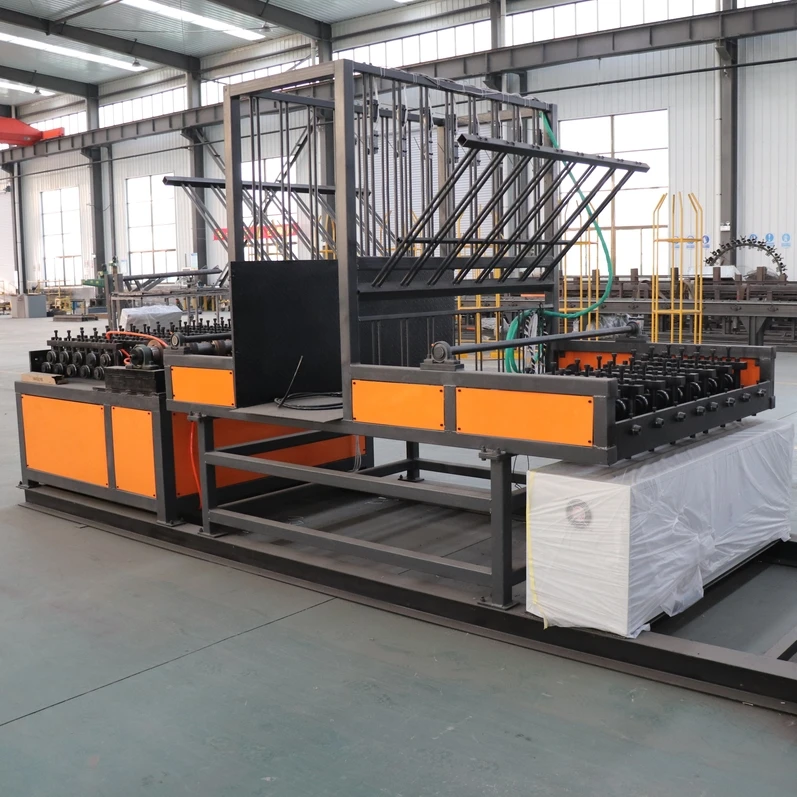

High - Frequency Automatic Rebar Mesh Welder
High - frequency Automatic Rebar Mesh Welders operate at frequencies much higher than the standard power grid frequency, usually in the range of several thousand to tens of thousands of Hz. These welders use a high - frequency inverter to convert the low - frequency AC power to high - frequency AC power. The high - frequency current has several advantages in the welding process.
Firstly, the high - frequency current can penetrate the metal more effectively, resulting in a more concentrated heat distribution at the welding point. This means that less heat is dissipated into the surrounding metal, reducing the heat - affected zone and minimizing the distortion of the rebar. Secondly, the high - frequency operation allows for faster welding speeds, as the heat is generated more rapidly.
2. Welding Quality
Low - Frequency Welders
The welding quality of low - frequency Automatic Rebar Mesh Welders is generally satisfactory for many applications. However, due to the relatively slow heat generation and less efficient heat distribution, the weld joints may not be as uniform as those produced by high - frequency welders. There is a higher risk of incomplete fusion or uneven penetration, especially when welding thicker rebars or high - strength steels.
In addition, the larger heat - affected zone in low - frequency welding can lead to changes in the mechanical properties of the rebar near the weld joint. This may reduce the overall strength and ductility of the rebar mesh, which is a concern in some critical construction projects.
High - Frequency Welders
High - frequency Automatic Rebar Mesh Welders are capable of producing high - quality weld joints with excellent uniformity and penetration. The concentrated heat distribution ensures that the metal at the welding point is melted evenly, resulting in strong and reliable welds. The smaller heat - affected zone also helps to preserve the original mechanical properties of the rebar, making the rebar mesh more suitable for demanding applications.
For example, in the construction of high - rise buildings or bridges, where the structural integrity of the rebar mesh is of utmost importance, high - frequency welders are often the preferred choice.
3. Welding Speed
Low - Frequency Welders
As mentioned earlier, low - frequency Automatic Rebar Mesh Welders have a relatively slow welding speed. The low - frequency current takes more time to generate enough heat to melt the metal, especially for thicker rebars. This means that the production rate of low - frequency welders is lower compared to high - frequency welders.
In a large - scale manufacturing environment, the slow welding speed of low - frequency welders can significantly limit the production capacity, resulting in longer lead times and potentially higher costs.
High - Frequency Welders
High - frequency Automatic Rebar Mesh Welders are known for their high welding speeds. The high - frequency current can quickly heat up the metal at the welding point, allowing for rapid melting and solidification. This enables high - frequency welders to produce rebar meshes at a much faster rate than low - frequency welders.
For example, a high - frequency welder can produce several times more rebar meshes per hour than a low - frequency welder, making it a more efficient choice for large - volume production.
4. Energy Efficiency
Low - Frequency Welders
Low - frequency Automatic Rebar Mesh Welders are generally less energy - efficient than high - frequency welders. The slow heat generation process requires more energy to achieve the same welding results. In addition, the larger heat - affected zone means that more energy is wasted in heating the surrounding metal.
Over time, the higher energy consumption of low - frequency welders can result in significant cost increases, especially for businesses that operate their welders for long hours.
High - Frequency Welders
High - frequency Automatic Rebar Mesh Welders are more energy - efficient due to their concentrated heat distribution and faster welding speeds. The high - frequency current can generate the required heat with less energy input, reducing the overall energy consumption.
The energy savings can be substantial, especially for large - scale production facilities. By choosing a high - frequency welder, businesses can not only reduce their operating costs but also contribute to environmental sustainability.
5. Cost
Low - Frequency Welders
Low - frequency Automatic Rebar Mesh Welders are usually more affordable in terms of the initial purchase price. The simple electrical circuit and less complex technology make them cheaper to manufacture, which is reflected in the lower price tag.
However, when considering the long - term costs, including energy consumption and maintenance, the total cost of ownership of low - frequency welders may be higher than that of high - frequency welders.
High - Frequency Welders
High - frequency Automatic Rebar Mesh Welders have a higher initial purchase price due to the more advanced technology and complex components. However, the energy savings, higher production rates, and better welding quality can offset the higher upfront cost over time.
In the long run, high - frequency welders can provide a better return on investment, especially for businesses that require high - quality rebar meshes and high - volume production.
6. Application Scope
Low - Frequency Welders
Low - frequency Automatic Rebar Mesh Welders are suitable for applications where the welding quality requirements are not extremely high, and the production volume is relatively small. For example, in some small - scale construction projects or DIY applications, low - frequency welders can be a cost - effective choice.
They are also suitable for welding thinner rebars or lower - strength steels, where the limitations of low - frequency welding are less pronounced.
High - Frequency Welders
High - frequency Automatic Rebar Mesh Welders are ideal for applications that require high - quality welds and high - volume production. They are commonly used in large - scale construction projects, such as high - rise buildings, bridges, and industrial facilities.
In addition, high - frequency welders are well - suited for welding high - strength steels and thicker rebars, where the superior welding performance of high - frequency technology is essential.
As a supplier of Automatic Rebar Mesh Welders, Automatic Wire Mesh Welders, and Automatic Steel Bar Mesh Welding Machines, we understand the unique needs of our customers. Whether you need a low - frequency welder for small - scale projects or a high - frequency welder for large - volume production, we can provide you with the right equipment and professional advice.
If you are interested in learning more about our Automatic Rebar Mesh Welders or would like to discuss your specific requirements, please feel free to contact us. We look forward to the opportunity to work with you and help you achieve your production goals.
References
- Welding Handbook, American Welding Society
- Principles of Metal Joining, McGraw - Hill Education