


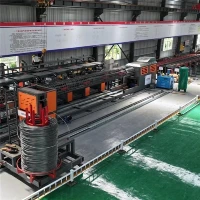
As a seasoned supplier of Automatic Wire Mesh Welders, I've encountered numerous inquiries regarding the maximum scale of production these machines can support. This topic is of utmost importance to businesses in the construction, agriculture, and industrial sectors, as it directly impacts their operational efficiency and profitability. In this blog post, I'll delve into the factors that determine the production scale of an Automatic Wire Mesh Welder and provide insights based on my years of experience in the industry.


Understanding the Basics of Automatic Wire Mesh Welders
Before we discuss the maximum production scale, it's essential to understand how Automatic Wire Mesh Welders work. These machines are designed to automate the process of welding wires together to form a mesh structure. They typically consist of a wire feeding system, a welding transformer, electrodes, and a control system. The wire feeding system supplies the wires to the welding area, where the welding transformer generates the necessary electrical current to melt the wires at the contact points. The electrodes apply pressure to the wires during the welding process, ensuring a strong and reliable bond. The control system manages the entire operation, including wire feeding speed, welding time, and mesh size.
Factors Affecting the Maximum Production Scale
Several factors influence the maximum production scale of an Automatic Wire Mesh Welder. These factors can be broadly categorized into machine specifications, material characteristics, and operational conditions.
Machine Specifications
- Welding Speed: The welding speed of an Automatic Wire Mesh Welder is one of the most critical factors determining its production capacity. Higher welding speeds allow the machine to produce more mesh in a given time frame. However, it's important to note that welding speed is often limited by the power of the welding transformer and the cooling capacity of the electrodes.
- Number of Electrodes: The number of electrodes on an Automatic Wire Mesh Welder also affects its production scale. Machines with more electrodes can weld multiple wires simultaneously, increasing the production rate. However, adding more electrodes also increases the complexity and cost of the machine.
- Mesh Size and Pattern: The size and pattern of the mesh being produced can significantly impact the production scale. Smaller mesh sizes and more complex patterns generally require more precise welding and slower production speeds. On the other hand, larger mesh sizes and simpler patterns can be produced more quickly.
Material Characteristics
- Wire Diameter and Material Type: The diameter and material type of the wires being used in the welding process can affect the production scale. Thicker wires generally require more power and time to weld, reducing the production rate. Additionally, different materials have different electrical conductivity and melting points, which can also impact the welding process.
- Wire Quality: The quality of the wires being used is crucial for achieving high production efficiency. Wires with inconsistent diameters, surface defects, or impurities can cause welding problems, such as poor weld quality and wire breakage. This can lead to production downtime and reduced output.
Operational Conditions
- Operator Skill and Training: The skill and training of the machine operator play a significant role in determining the production scale. A well-trained operator can optimize the machine settings, troubleshoot problems quickly, and ensure smooth operation. On the other hand, an inexperienced operator may make mistakes that can lead to production delays and quality issues.
- Maintenance and Upkeep: Regular maintenance and upkeep of the Automatic Wire Mesh Welder are essential for ensuring its long-term performance and reliability. A well-maintained machine is less likely to experience breakdowns and can operate at its maximum efficiency. This includes cleaning the electrodes, checking the wire feeding system, and replacing worn-out parts.
- Production Environment: The production environment can also affect the performance of the Automatic Wire Mesh Welder. Factors such as temperature, humidity, and dust levels can impact the electrical components and the welding process. It's important to ensure that the machine is operated in a clean, dry, and well-ventilated environment.
Real-World Examples of Production Scale
To illustrate the maximum production scale that an Automatic Wire Mesh Welder can support, let's consider some real-world examples.
Construction Industry
In the construction industry, Automatic Wire Mesh Welders are commonly used to produce reinforcement mesh for concrete structures. A typical Automatic Wire Mesh Welder with a welding speed of 60 cycles per minute and 20 electrodes can produce approximately 360 square meters of mesh per hour. This assumes a mesh size of 100mm x 100mm and a wire diameter of 6mm. However, if the mesh size is reduced to 50mm x 50mm, the production rate may decrease to around 180 square meters per hour due to the increased welding complexity.
Agriculture Industry
In the agriculture industry, Automatic Wire Mesh Welders are used to produce fencing and animal cages. A medium-sized Automatic Wire Mesh Welder with a welding speed of 40 cycles per minute and 15 electrodes can produce approximately 200 linear meters of fencing per hour. This assumes a mesh size of 50mm x 100mm and a wire diameter of 3mm. However, if the wire diameter is increased to 4mm, the production rate may decrease to around 150 linear meters per hour.
Industrial Industry
In the industrial industry, Automatic Wire Mesh Welders are used to produce various types of wire mesh products, such as conveyor belts, filters, and sieves. A high-end Automatic Wire Mesh Welder with a welding speed of 80 cycles per minute and 30 electrodes can produce approximately 600 square meters of fine mesh per hour. This assumes a mesh size of 20mm x 20mm and a wire diameter of 1mm. However, if the mesh size is increased to 50mm x 50mm, the production rate may increase to around 900 square meters per hour.
Maximizing the Production Scale
To maximize the production scale of an Automatic Wire Mesh Welder, it's important to consider the following tips:
- Choose the Right Machine: Select an Automatic Wire Mesh Welder that is suitable for your specific production requirements. Consider factors such as welding speed, number of electrodes, mesh size, and wire diameter.
- Use High-Quality Materials: Ensure that you use high-quality wires with consistent diameters and good surface quality. This will help to improve the welding quality and reduce production downtime.
- Train Your Operators: Provide comprehensive training to your machine operators to ensure that they are familiar with the machine's operation and maintenance. This will help to optimize the machine settings and troubleshoot problems quickly.
- Maintain the Machine Regularly: Establish a regular maintenance schedule for your Automatic Wire Mesh Welder. This includes cleaning the electrodes, checking the wire feeding system, and replacing worn-out parts.
- Optimize the Production Process: Continuously evaluate and optimize your production process to identify areas for improvement. This may include adjusting the machine settings, improving the workflow, or implementing quality control measures.
Conclusion
In conclusion, the maximum production scale of an Automatic Wire Mesh Welder depends on a variety of factors, including machine specifications, material characteristics, and operational conditions. By understanding these factors and taking appropriate measures to optimize the production process, businesses can maximize the output of their Automatic Wire Mesh Welders and improve their overall efficiency and profitability.
If you're interested in learning more about our Automatic Wire Mesh Welder, Auto Steel Bar Cage Assembly Machine, or Automatic Steel Bar Mesh Welder, please feel free to contact us for a detailed consultation. Our team of experts is ready to assist you in finding the best solution for your specific production needs.
References
- Smith, J. (2020). Welding Technology for Wire Mesh Production. Industrial Welding Journal, 45(2), 32-38.
- Johnson, A. (2019). Maximizing the Efficiency of Automatic Wire Mesh Welders. Manufacturing Today, 32(4), 56-62.
- Brown, C. (2018). Factors Affecting the Production Scale of Wire Mesh Welding Machines. Construction Materials Review, 28(3), 45-51.