


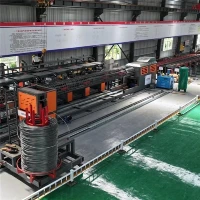
As a supplier of Electric Steel Bar Cut Lines, ensuring the tightness of mechanical connections in these lines is of utmost importance. A well - maintained and properly tightened electric steel bar cut line not only guarantees the safety of operators but also enhances the overall efficiency and longevity of the equipment. In this blog, I'll share some effective methods to check the tightness of mechanical connections in an electric steel bar cut line.
1. Visual Inspection
The first step in checking the tightness of mechanical connections is a thorough visual inspection. This is a simple yet crucial method that can quickly identify obvious signs of loose connections.
When conducting a visual inspection, pay close attention to bolts, nuts, and other fasteners. Look for any signs of corrosion, rust, or physical damage. Corroded or damaged fasteners may not hold the components together securely, leading to potential loosening over time. For example, if you notice rust on a bolt, it could be a sign that moisture has penetrated the connection, which might have weakened the grip.
Also, check for any visible gaps or misalignments between connected parts. In an Electric Reinforcement Shear Line, misaligned components can cause uneven stress distribution, which in turn can loosen the connections. For instance, if the cutting blade assembly is not properly aligned with the guide rails, the constant vibration during operation can gradually loosen the bolts holding the blade in place.
2. Torque Testing
Torque testing is a more accurate method to determine the tightness of mechanical connections. Every bolt and nut in an electric steel bar cut line has a specific torque specification, which is determined by the manufacturer based on the design and material of the components.

To perform torque testing, you'll need a torque wrench. This tool allows you to apply a specific amount of force to the fastener and measure the torque being applied. First, refer to the equipment's manual to find the recommended torque values for each connection. Then, use the torque wrench to check if the fasteners are tightened to the specified torque.
If the torque reading is lower than the recommended value, it indicates that the connection is loose. In this case, you should tighten the fastener to the correct torque. However, be careful not to over - tighten, as this can also cause problems such as stripped threads or damaged components.

3. Vibration Analysis
Vibration analysis is a sophisticated method that can detect loose connections early by analyzing the vibration patterns of the electric steel bar cut line. During normal operation, the equipment vibrates at a certain frequency and amplitude. Any change in these vibration characteristics can indicate a problem, such as a loose connection.
To perform vibration analysis, you can use a vibration sensor or a vibration analyzer. These devices can measure the vibration levels and frequencies at different points on the equipment. By comparing the measured data with the baseline values (the normal vibration patterns), you can identify any abnormal vibrations.
For example, if there is a loose connection in the drive system of an Electric Reinforcement Cut Line, it can cause an increase in vibration amplitude or a change in the vibration frequency. By detecting these changes early, you can take corrective action before the problem worsens.
4. Ultrasonic Testing
Ultrasonic testing is another advanced technique for checking the tightness of mechanical connections. This method uses high - frequency sound waves to detect internal flaws or changes in the structure of the components.
In the context of an electric steel bar cut line, ultrasonic testing can be used to check the integrity of welded joints and the tightness of press - fit connections. When an ultrasonic wave is sent through a component, it reflects off internal boundaries, such as cracks or gaps. By analyzing the reflected waves, you can determine if there are any problems with the connection.
For example, if there is a loose press - fit connection between a shaft and a gear in an Electric Steel Bar Shear Line, the ultrasonic test can detect the presence of a small gap between the two components, indicating a loose connection.
5. Periodic Maintenance and Re - checking
Checking the tightness of mechanical connections is not a one - time task. It should be part of a regular maintenance schedule. Periodic re - checking helps to ensure that the connections remain tight over time, especially considering the high - stress environment in which electric steel bar cut lines operate.
Set a specific interval for checking the connections based on the usage and operating conditions of the equipment. For heavy - duty applications, more frequent checks may be required. During each maintenance session, repeat the visual inspection, torque testing, and other relevant methods to ensure that all connections are secure.
6. Importance of Training Operators
Operators play a crucial role in maintaining the tightness of mechanical connections in an electric steel bar cut line. They are the ones who operate the equipment on a daily basis and are in the best position to notice any signs of problems.
Provide comprehensive training to operators on how to check the tightness of connections and what to look for. Teach them the basic methods of visual inspection, how to use a torque wrench correctly, and the importance of reporting any abnormal vibrations or other issues immediately.
By empowering operators with the knowledge and skills to maintain the equipment, you can significantly reduce the risk of loose connections and improve the overall safety and performance of the electric steel bar cut line.
Conclusion
Checking the tightness of mechanical connections in an electric steel bar cut line is essential for the safe and efficient operation of the equipment. By using a combination of visual inspection, torque testing, vibration analysis, ultrasonic testing, and regular maintenance, you can ensure that all connections are secure.
If you are in the market for a high - quality Electric Reinforcement Shear Line, Electric Reinforcement Cut Line, or Electric Steel Bar Shear Line, we are here to assist you. Our products are designed with the highest standards of quality and reliability. We welcome you to contact us for further information and to discuss your specific requirements. We look forward to the opportunity to work with you and provide you with the best solutions for your steel bar cutting needs.
References
- Machinery's Handbook, 31st Edition, Industrial Press Inc.
- ISO Standards on Mechanical Fasteners and Assembly.
- Manufacturer's Manuals for Electric Steel Bar Cut Lines.