


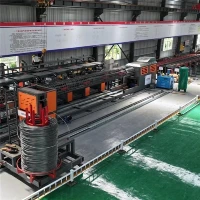
As a supplier of Automatic Wire Mesh Welders, I often receive inquiries from customers about the machine's performance in various environments. One question that comes up frequently is whether an Automatic Wire Mesh Welder can work in a high - humidity environment. In this blog, I'll delve into this topic, exploring the challenges, potential solutions, and the overall feasibility of operating these machines under such conditions.
Understanding the Automatic Wire Mesh Welder
Before we discuss the impact of high humidity, let's briefly introduce the Automatic Wire Mesh Welder. An Automatic Wire Mesh Welder is a sophisticated piece of equipment designed to automate the process of welding wire meshes. It can handle different types of wires, including steel bars, and produce high - quality meshes with precise dimensions and consistent welds. There are also related machines like the Automatic Steel Bar Mesh Welding Machine and Automatic Steel Bar Mesh Welder, which are specialized for working with steel bars to create strong and reliable meshes.
These machines typically consist of a wire feeding system, a welding transformer, electrodes, and a control system. The wire feeding system delivers the wires to the welding area, the welding transformer provides the necessary electrical energy for welding, the electrodes apply pressure and conduct the current to form the welds, and the control system manages the entire process, ensuring accuracy and efficiency.
Challenges in High - Humidity Environments
High - humidity environments pose several challenges to the operation of an Automatic Wire Mesh Welder.
Corrosion
One of the most significant issues is corrosion. Moisture in the air can cause metal components of the welder, such as the electrodes, welding transformer, and wire feeding mechanisms, to rust. Corrosion can damage the surface of these components, reducing their conductivity and mechanical strength. For example, rust on the electrodes can lead to poor electrical contact during welding, resulting in inconsistent weld quality. Over time, severe corrosion can even cause parts to fail, leading to costly repairs and downtime.
Electrical Issues
High humidity can also affect the electrical performance of the welder. Moisture can accumulate on electrical components, causing short - circuits or insulation breakdown. The control system, which relies on precise electrical signals to operate, is particularly vulnerable. A short - circuit in the control system can disrupt the welding process, leading to incorrect wire feeding, improper welding timing, or even complete machine shutdown. Additionally, moisture can increase the electrical resistance of the welding circuit, reducing the welding current and affecting the quality of the welds.
Weld Quality
The presence of moisture can have a direct impact on the quality of the welds. When welding in a high - humidity environment, the moisture can be absorbed by the wires and the welding area. During the welding process, this moisture can turn into steam, creating porosity in the welds. Porous welds are weaker and more prone to cracking, which can compromise the structural integrity of the wire mesh. Moreover, the steam can also cause spattering, making the welding process less stable and the finished product less aesthetically pleasing.
Potential Solutions
Despite these challenges, there are several ways to enable an Automatic Wire Mesh Welder to work effectively in a high - humidity environment.
Environmental Control
One of the most effective solutions is to control the environment in which the welder operates. This can be achieved by installing dehumidifiers in the workshop. Dehumidifiers can reduce the relative humidity in the air, keeping it at a level that is safe for the welder. A recommended relative humidity range for operating an Automatic Wire Mesh Welder is between 30% and 60%. Additionally, proper ventilation should be ensured to remove any moisture - laden air and prevent the accumulation of humidity.


Protective Coatings
Applying protective coatings to the metal components of the welder can help prevent corrosion. For example, a layer of anti - rust paint can be applied to the electrodes and other exposed metal parts. There are also specialized coatings available that can provide better protection against moisture and corrosion. These coatings can act as a barrier, preventing moisture from coming into contact with the metal surface.
Regular Maintenance
Regular maintenance is crucial for the reliable operation of the welder in a high - humidity environment. This includes cleaning the machine regularly to remove any accumulated moisture and dirt. The electrical components should be inspected for signs of moisture damage, and any affected parts should be dried or replaced promptly. The electrodes should be checked for wear and corrosion, and replaced when necessary. Additionally, the welding parameters should be adjusted regularly to account for any changes in the electrical properties of the machine due to humidity.
Use of Moisture - Resistant Materials
When possible, using moisture - resistant materials in the construction of the welder can enhance its performance in a high - humidity environment. For example, some manufacturers use stainless steel or other corrosion - resistant alloys for critical components. These materials are less likely to rust and can withstand the effects of moisture better than traditional steel.
Feasibility of Operation
With the appropriate measures in place, it is feasible for an Automatic Wire Mesh Welder to work in a high - humidity environment. However, it requires careful planning and management. The cost of implementing environmental control measures, such as dehumidifiers and ventilation systems, should be considered. Additionally, the increased maintenance requirements may also add to the operating costs.
In some industries, such as the construction industry in coastal areas or underground mines where high humidity is unavoidable, the benefits of using an Automatic Wire Mesh Welder often outweigh the challenges. These machines can significantly improve productivity and the quality of wire meshes, which are essential for many construction projects. Therefore, with proper precautions, an Automatic Wire Mesh Welder can be a valuable asset even in high - humidity environments.
Conclusion
In conclusion, while a high - humidity environment presents several challenges to the operation of an Automatic Wire Mesh Welder, it is possible to overcome these challenges with the right strategies. By implementing environmental control measures, using protective coatings, conducting regular maintenance, and using moisture - resistant materials, the welder can operate reliably and produce high - quality wire meshes.
If you are considering purchasing an Automatic Wire Mesh Welder for use in a high - humidity environment, we are here to provide you with professional advice and support. Our team of experts can help you choose the right machine and develop a comprehensive plan to ensure its successful operation. Whether you need an Automatic Wire Mesh Welder, an Automatic Steel Bar Mesh Welding Machine, or an Automatic Steel Bar Mesh Welder, we have the solutions to meet your needs. Contact us today to start the procurement discussion and take your wire mesh production to the next level.
References
- Welding Handbook, American Welding Society
- Industrial Equipment Maintenance Guide, McGraw - Hill Education
- Environmental Control in Manufacturing, Wiley Publishing